Gravity Ball (NBA2K2025 Minigame) Launcher Explorations

The concept art exploration for the Gravity Ball launchers was a deep dive into the visual language of power, motion, and individuality. As one of the player’s core tools and primary visual focal points, the launchers needed to do more than just function—they had to express. Our design journey was all about finding the sweet spot between believable sports tech and unrestrained, over-the-top invention.

Concept Art by Farzad Varahramyan and Tony Weinstock

We began with grounded explorations, imagining what a "real" Gravity Ball launcher might look like in a professional futuristic sport. These early concepts focused on sleek mechanical forms, ergonomic grip systems, and modular components that suggested precision and competitive performance. Think lightweight carbon fiber, magnetic sling systems, and kinetic coil launchers—equipment that looked engineered for elite athletes competing in a zero-gravity arena.

Once the foundation was in place, we pushed the boundaries of expression and spectacle. We imagined what launchers might look like if they were designed not by engineers, but by artists, fanatics, or even mad scientists. This phase of exploration produced an incredible variety of absurd and whimsical concepts—from launchers shaped like musical instruments, carnival cannons, and alien biomorphs to devices that looked cobbled together from scrap metal, glowing crystals, or animated slime.

Our team had fun imagining characters who would personalize their gear: a punk-themed launcher covered in spikes and neon stickers; a vintage sci-fi model with spinning gyros and vacuum tubes; a launcher disguised as a plush toy that belies its destructive power. Each concept aimed to tell a story about the player using it, giving the gear a sense of identity and flair. Function remained key—we always designed with animation, sound design, and in-game visibility in mind—but flair often took the front seat.

Material exploration was also central to the process. We mixed matte plastics with chrome, holographic wraps, worn leather grips, glowing plasma cores, and even cartoon-like paint finishes. Every surface treatment helped reinforce a world where no two players are alike, and where creativity is not only allowed but encouraged.

The final roster of launcher designs ranges from sleek and serious to wild and absurd, reflecting the playful spirit of Gravity Ball itself. They are both tools and extensions of the player's personality—visual markers of performance, style, and fun.
Gravity Ball (NBA2K2025 Minigame) Magna Grips Explorations

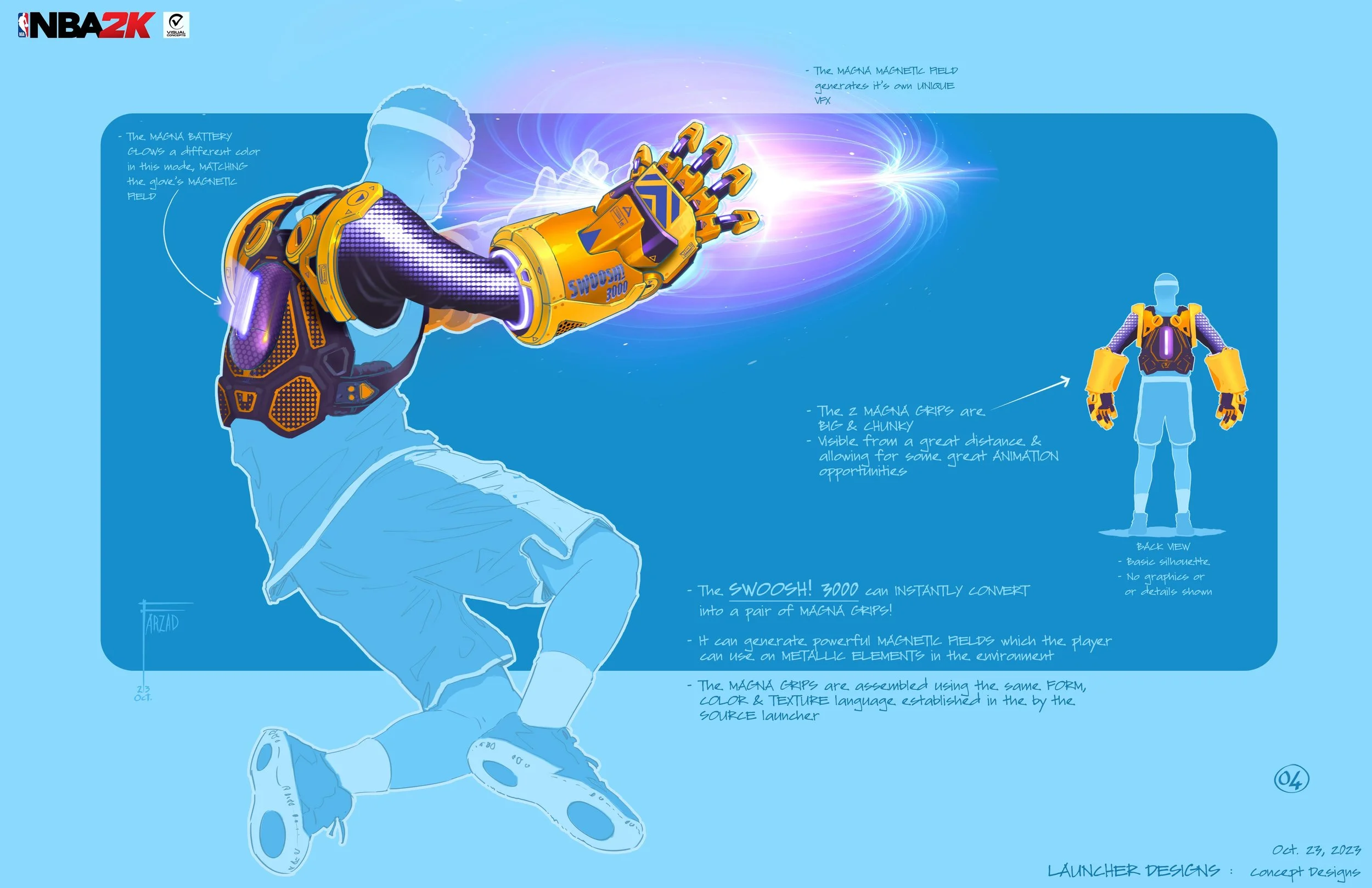
The Magna Grips—core to both movement and identity in Gravity Ball—were one of the most creatively rich and versatile elements we tackled during the concept art process. As the gear that allows players to grip, swing, vault, and anchor themselves mid-air, these gloves were not just equipment—they were style statements. Our exploration spanned the spectrum from practical sportswear to the wonderfully absurd, always with the goal of empowering player expression while supporting dynamic gameplay.

Concept Art by Farzad Varahramyan

Concept Art by Farzad Varahramyan

Concept Art by Farzad Varahramyan

Concept Art by Farzad Varahramyan

Our initial design direction leaned into familiar territory: performance gear with clear technological cues. These early concepts took inspiration from climbing gloves, tactical exo-suits, and high-tech athletic wear. We designed sleek, functional gloves with reinforced knuckles, magnetic pads, retractable tethers, and glowing energy nodes. Each detail supported the fantasy of a competitive sport, where precision grip and high maneuverability were essential to success.

Ultimately, the Magna Grips became one of the most expressive pieces of gear in the game. Whether minimalist or maximalist, serious or silly, each design offered players a chance to enhance their performance and show off their unique flair. They are a perfect representation of the game’s creative ethos—where form meets function, and function meets fun.

Gravity Ball (NBA2K2025 Minigame) Player Gear Explorations

The concept art process for uniforms and player gear in Gravity Ball was as imaginative as the game itself—a bold blend of high-impact sport and gravity-defying spectacle. From the beginning, we knew the visual identity needed to strike a balance between competitive intensity and unrestrained fun. Our goal was to craft a world where athleticism meets outrageous personality, all grounded in a design language that supports fluid gameplay and strong visual readability.

Concept art by Farzad Varahramyan

Concept art by Farzad Varahramyan

We began with grounded explorations: sleek athletic silhouettes inspired by traditional sportswear, with form-fitting uniforms, tactical gear, and team-based color schemes. These initial designs emphasized function—ergonomics, mobility, and team identity. We studied contemporary sports like basketball, roller derby, and even fencing, to understand how uniforms can amplify both performance and personality. This established the baseline look for a competitive sport grounded in some sense of realism.

Concept art by Farzad Varahramyan

Concept art by Farzad Varahramyan

From there, the team let loose, pushing into more stylized and exaggerated territory. The brief opened up to allow for expression that borders on the ridiculous but entertaining. We explored hyper-stylized uniforms, ideas that are eye-catching, distinctive shape languages, and bold color schemes  . Each design pass explored how players could visually express themselves through gear customization and silhouette diversity, while remaining legible and cohesive in fast-paced gameplay.

Concept art by Farzad Varahramyan

Concept art by Farzad Varahramyan

Concept art by Farzad Varahramyan

Concept art by Farzad Varahramyan

Concept art by Farzad Varahramyan

This visual exploration wasn't just about aesthetics—it was about creating a world where every player avatar felt like an extension of the player’s identity. The absurd and the stylish sat side by side, offering a wide range of visual cues for both narrative worldbuilding and dynamic gameplay readability. The final result is a universe where intense sport and expressive design collide, capturing the heart of what Gravity Ball is all about: high-flying action, identity, and spectacle

Gravity Ball (NBA2K2025 Minigame) Arena Explorations

The Gravity Ball minigame introduced in NBA 2K25 called for a complete departure from traditional basketball court design. This mode isn’t just about scoring—it's about navigating dynamic, vertical, and often chaotic environments. The concept art phase focused on reimagining space as a gameplay tool, blending fantasy with competitive mechanics.
A defining trait of Gravity Ball is its multi-level design. Verticality wasn’t just visual—it changed how players approached positioning, passing, and defense. The environments had to:

  • Support vertical traversal without overwhelming players unfamiliar with 3D movement.

  • Provide clearly tiered structures—lower zones for control, mid-layers for traversal, and upper areas for power plays.

  • Include jump pads, ramps, and wall-runnable surfaces to promote fluid movement.

Concept art often explored layering gameplay space like an arena shooter, with chokepoints, sightlines, and flanking routes—recontextualized for basketball.

Concept art by Tony Weinstock

The core challenge in designing environments for Gravity Ball was balancing whimsy and functionality. Designers wanted each court to feel imaginative and playful, but still serve the needs of fast-paced, team-based competition. This meant asking key questions:

  • How can the space encourage vertical movement?

  • What kind of surfaces or structures could support wall-based traversal?

  • How can the environment communicate key play areas without overwhelming the player visually?

There was a consistent emphasis on readability, flow, and visual hierarchy, even in the most abstract environments.

Concept art by Tony Weinstock

The core challenge in designing environments for Gravity Ball was balancing whimsy and functionality. Designers wanted each court to feel imaginative and playful, but still serve the needs of fast-paced, team-based competition. This meant asking key questions:

  • How can the space encourage vertical movement?

  • What kind of surfaces or structures could support wall-based traversal?

  • How can the environment communicate key play areas without overwhelming the player visually?

There was a consistent emphasis on readability, flow, and visual hierarchy, even in the most abstract environments.

Concept art by Tony Weinstock

Walls played a dual role: movement utility and tactical element. From the start, designers asked, “What if walls weren’t just boundaries, but tools?”

Explorations included:

  • Wall-running surfaces that could be chained into jumps or passes.

  • Semi-transparent shields used to temporarily block shots or protect while charging up.

  • Breakable walls or floors that responded to player impact or power-ups.

This added a layer of spatial manipulation uncommon in sports games and pushed the environments closer to hybrid platformer/arena design.

Concept art by Tony Weinstock

Concept art by Tony Weinstock

The environment design for Gravity Ball was a playful but intentional exploration of how far a sports game could go when unshackled from realism. The process revolved around:

  • Experimenting with nontraditional spatial layouts

  • Reworking how players interact with the court

  • Ensuring visual clarity in a chaotic, vertical space

Concept art served as a sandbox for testing these ideas—balancing imagination with playability, and style with structure.

All Gravity Ball Arena concept art created by Tony Weinstock

Gravity Ball (NBA2K2025 Minigame) Helmet Designs

The following concept art is helmet designs for Gravity Ball, a mini game within The City, NBA2K2025. These helmets are available for in-app purchases, allowing players to customize their player character for either team colors, blue or yellow. This helmet will replace the default team-color helmet. Construction drawings were carefully crafted to guide the character modelers in building accurate models with the constraint of fitting and not overly exceeding the footprint of the original helmet model.

Helmet placement guidance on player character body

Final construction drawings by Emmanuel Valdez

Color study by Emmanuel Valdez

Color study by Emmanuel Valdez

Final construction drawings by Emmanuel Valdez

Helmet placement guidance on player character body

Color study by Emmanuel Valdez

Color study by Emmanuel Valdez

Final construction drawings by Emmanuel Valdez

Helmet placement guidance on player character body

Color study by Emmanuel Valdez

Color study by Emmanuel Valdez

Final construction drawings by Emmanuel Valdez

Helmet placement guidance on player character body

Color study by Emmanuel Valdez

Color study by Emmanuel Valdez

Videos: LEGO 2K Drive

Here are some videos about LEGO 2K Drive including a couple narrated by me! Enjoy!

Big Butte Biome Concepts: LEGO 2K Drive

Early in the visual development of LEGO 2K Drive, I hired Farzad Varahramyan to help me envision a unique take on the real-world, natural elements of the game world, including foliage and rock formation designs. Our idea was to use LEGO bricks and elements to influence the shape language of the different rock formations for each biome. For example, the desert biome, known as Big Butte, adopted the shape language of more linear bricks such as the 2x2, 2x6, and 2x8 rectangular classic bricks. In contrast, the rocks in Prospecto Valley were modeled after the category of bricks known as “roof” elements or angled top bricks.

Concept Art by Farzad Varahramyan

Robot Invaders: LEGO 2K Drive

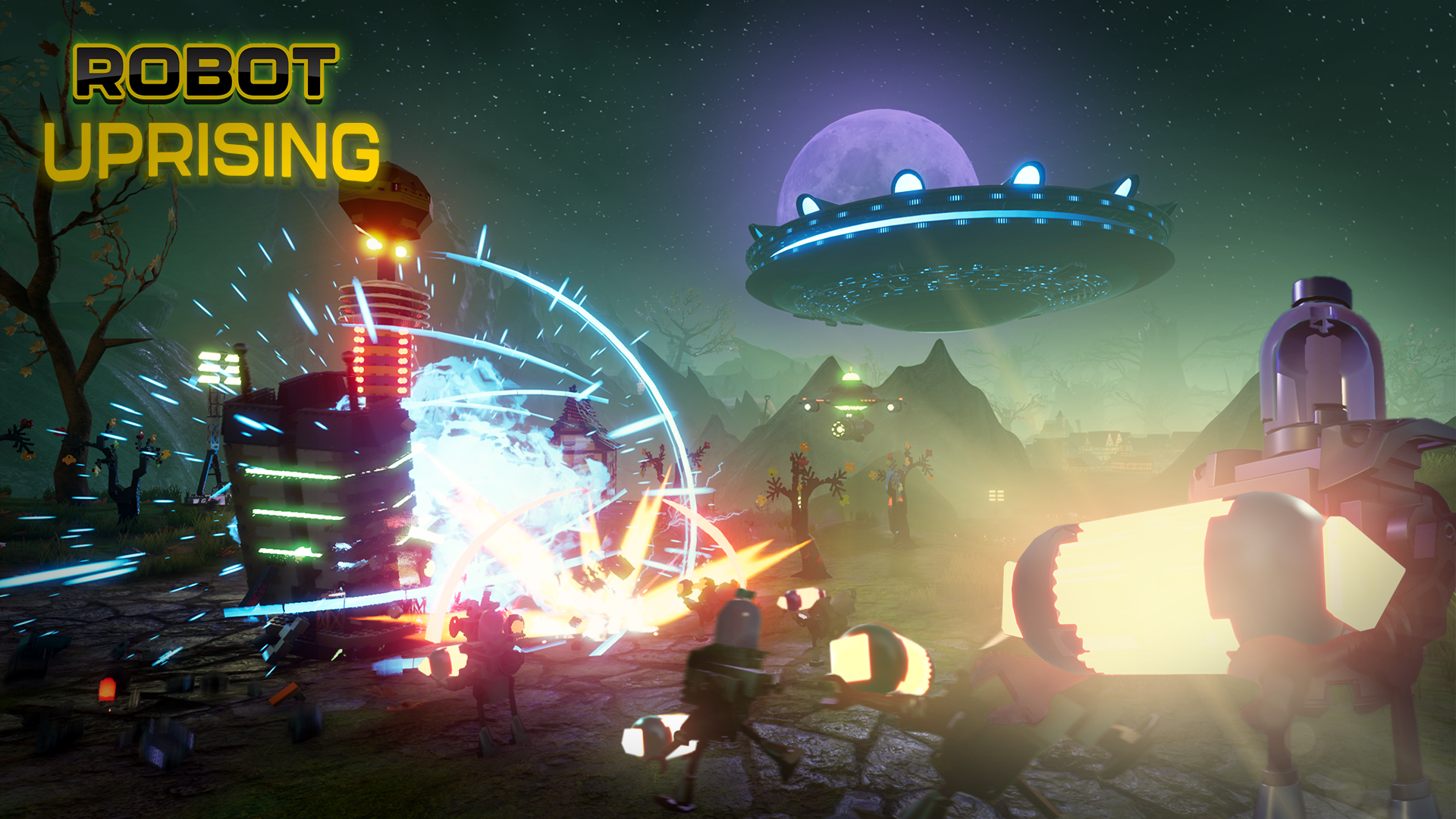
The Robot Invaders are the scourge that plague the world of LEGO 2K Drive, appearing in a series of mini-games. There are several classes of Robot Invader minions, including ground troops, bomb carriers, mobile cannons, and flying cannons. Here are the concepts I constructed in LEGO Digital Designer using real bricks.

Concept Designs by Emmanuel Valdez

S.T.U.D. Concepts: LEGO 2K Drive

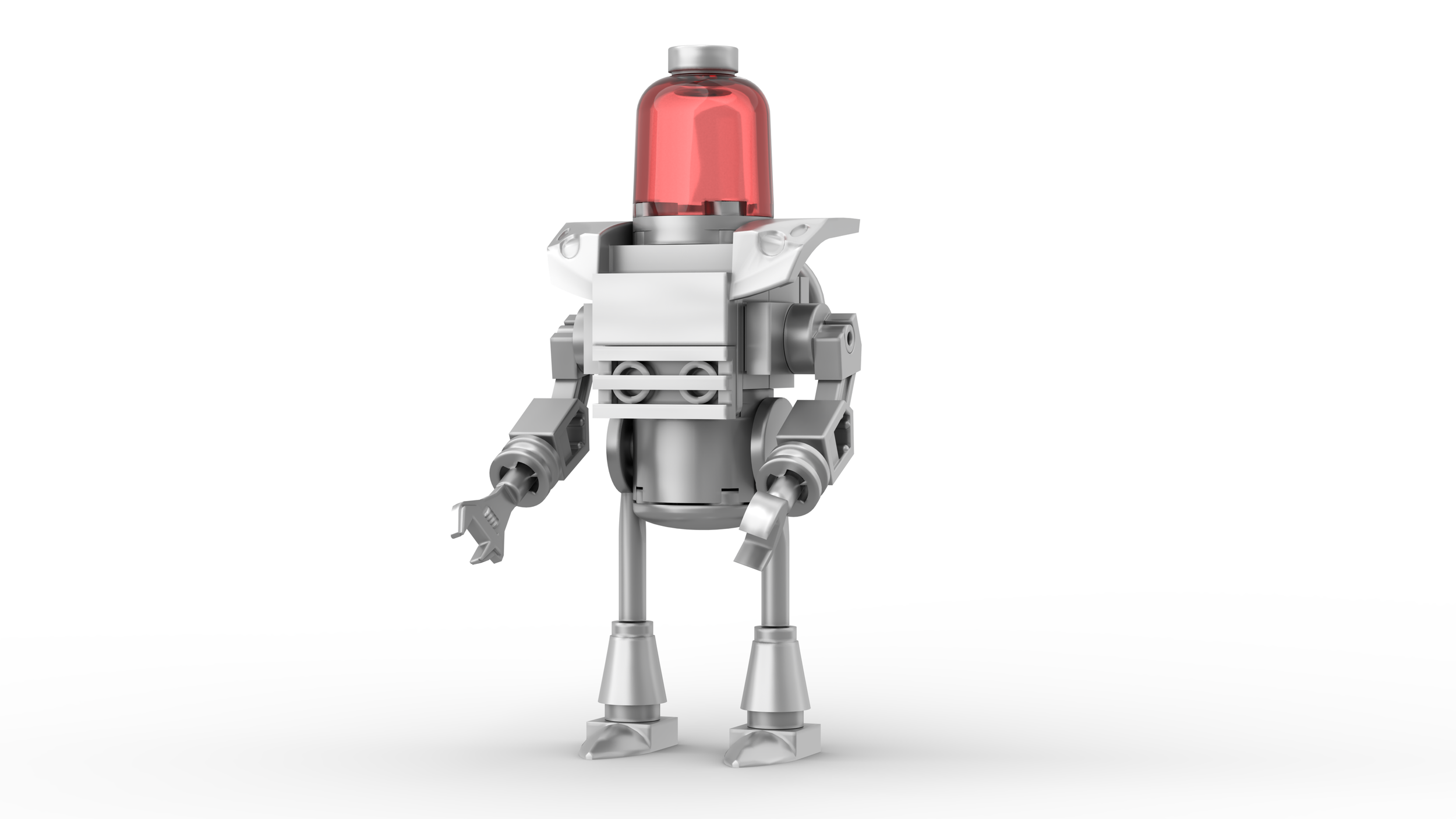
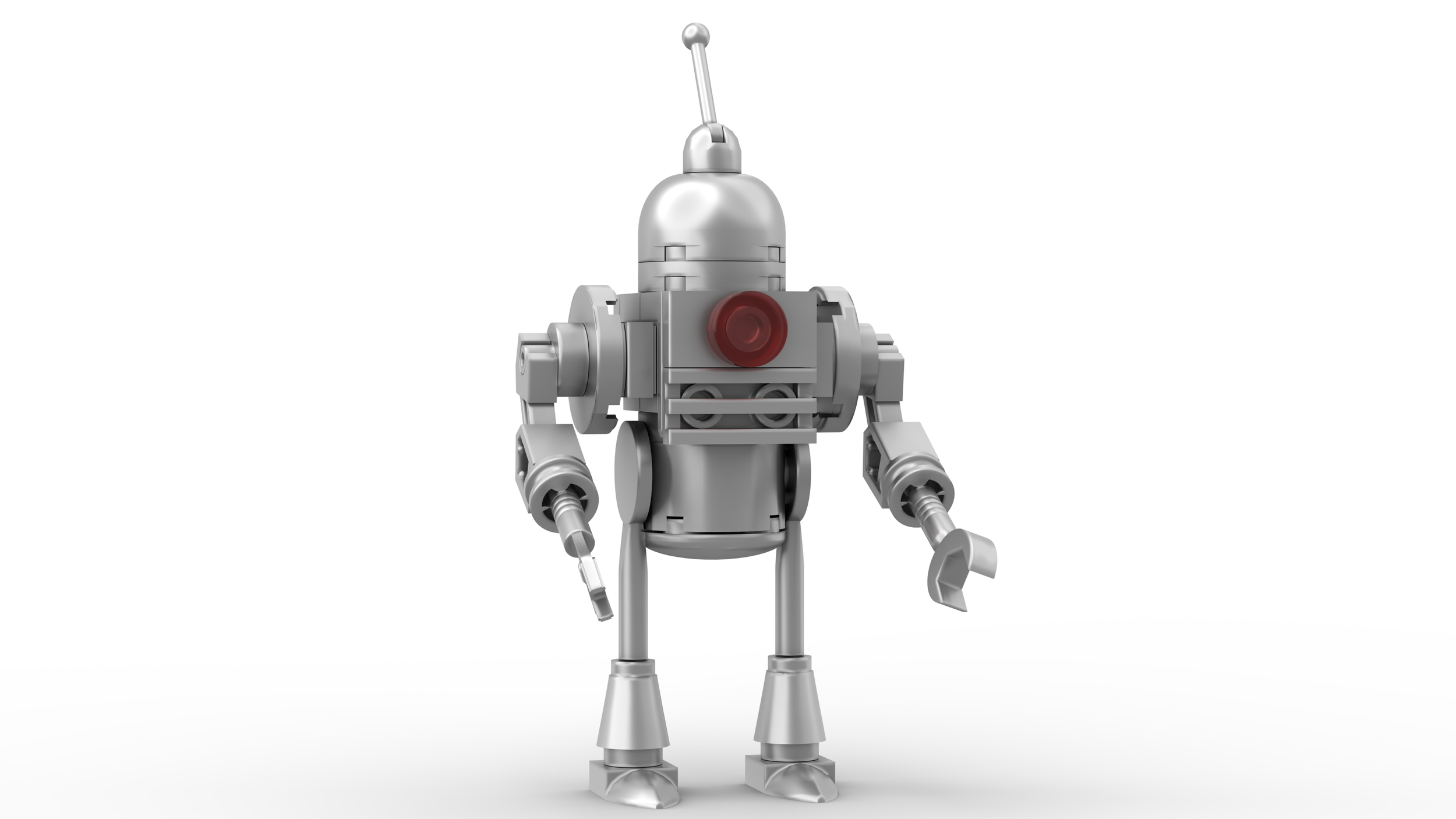
S.T.U.D. (Super Tiny Utility Droid) is your friendly robot helper in LEGO 2K Drive, assisting you during the onboarding experience and throughout the game. The following concepts were built in LEGO Digital Designer. The goal was to create a friendly, jovial robot that is expressive and has charm and appeal for players

Final, approved design for S.T.U.D.

Garage Interior Concepts: LEGO 2K Drive

One of the main features in LEGO 2K Drive is the Garage, where players can create their own vehicles, brick by brick, using an in-game tool. The following concepts were built in LEGO Digital Designer. The goal was to create a space that resembled a garage, set dressed with tools and equipment typically found in a mechanic's shop. Ultimately, the garage in the final game became a large warehouse space to better accommodate a free-roaming camera and a larger range of vehicle scales.

Concept Designs by Emmanuel Valdez

Loadout Diorama Concepts: LEGO 2K Drive

I came up with the idea to have the loadout UI use a diorama to display the vehicle the player chooses to use in the game. There are three vehicle types in the game: street, offroad, and water. The three diorama concepts represent each surface and vehicle type. The goal was to create a fun, static display that captures a snapshot of the vehicle in action, set against a sample of the world beneath.

Concept Designs by Emmanuel Valdez

Loading Screens: LEGO 2K Drive

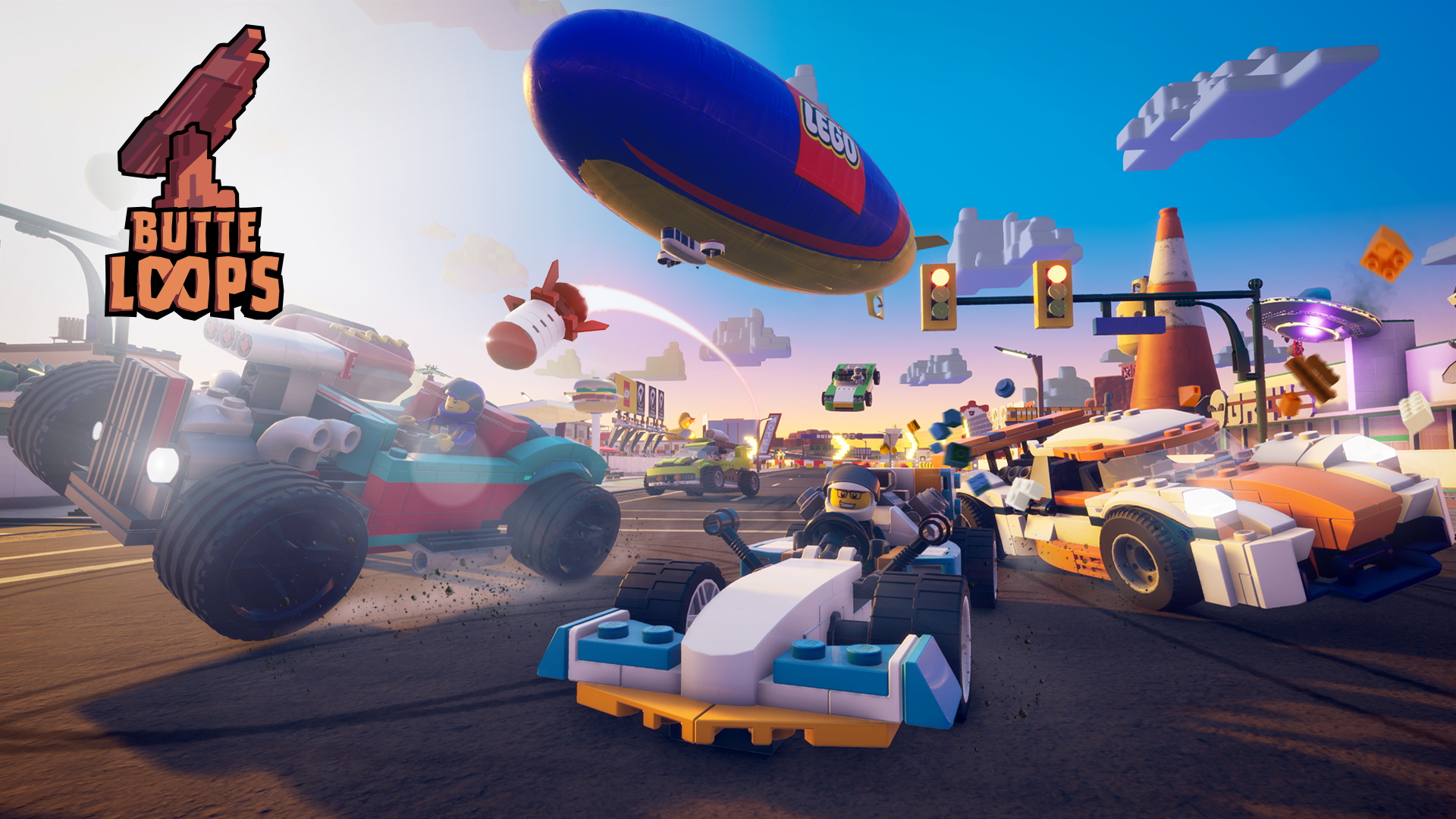
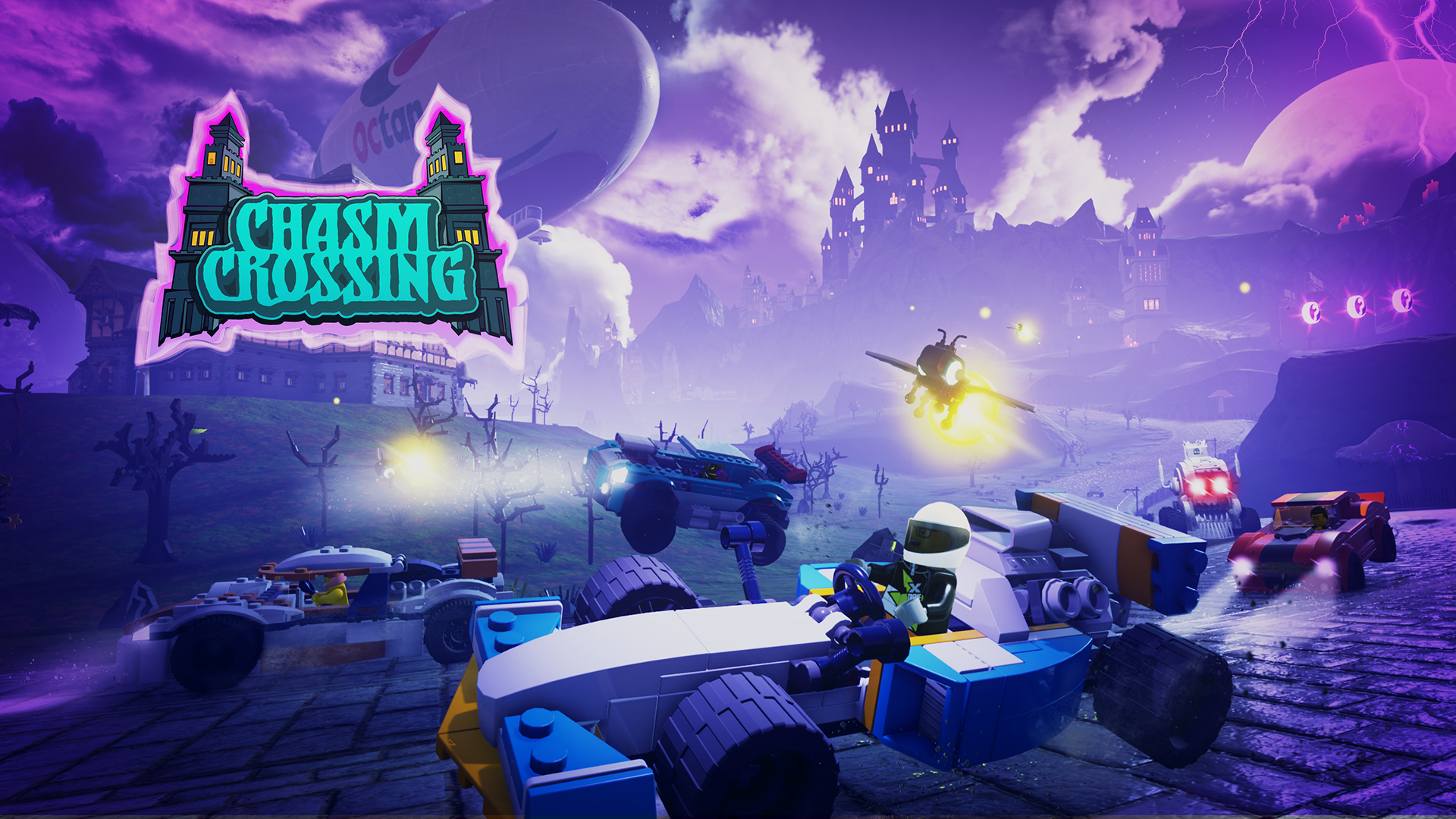
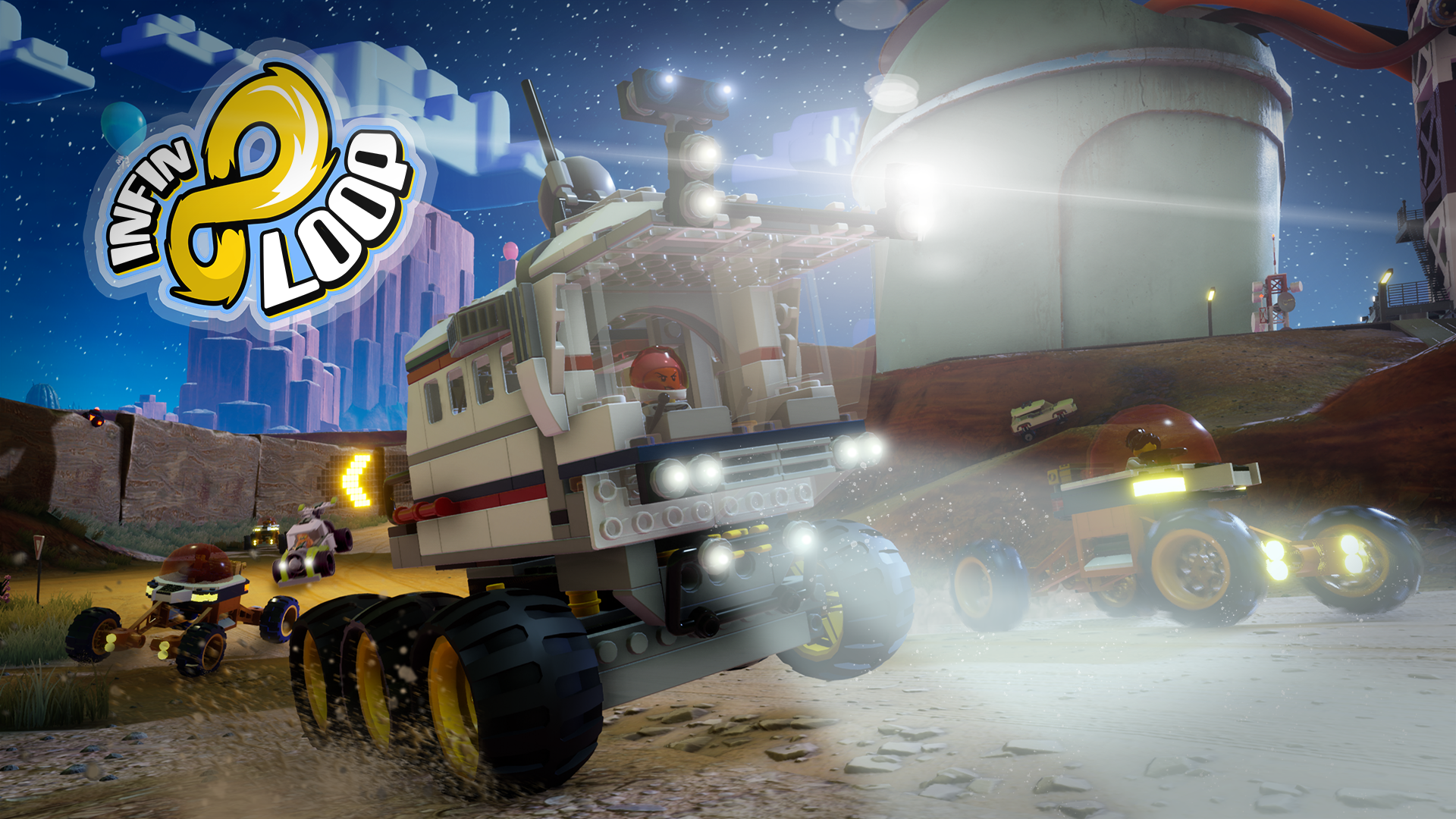
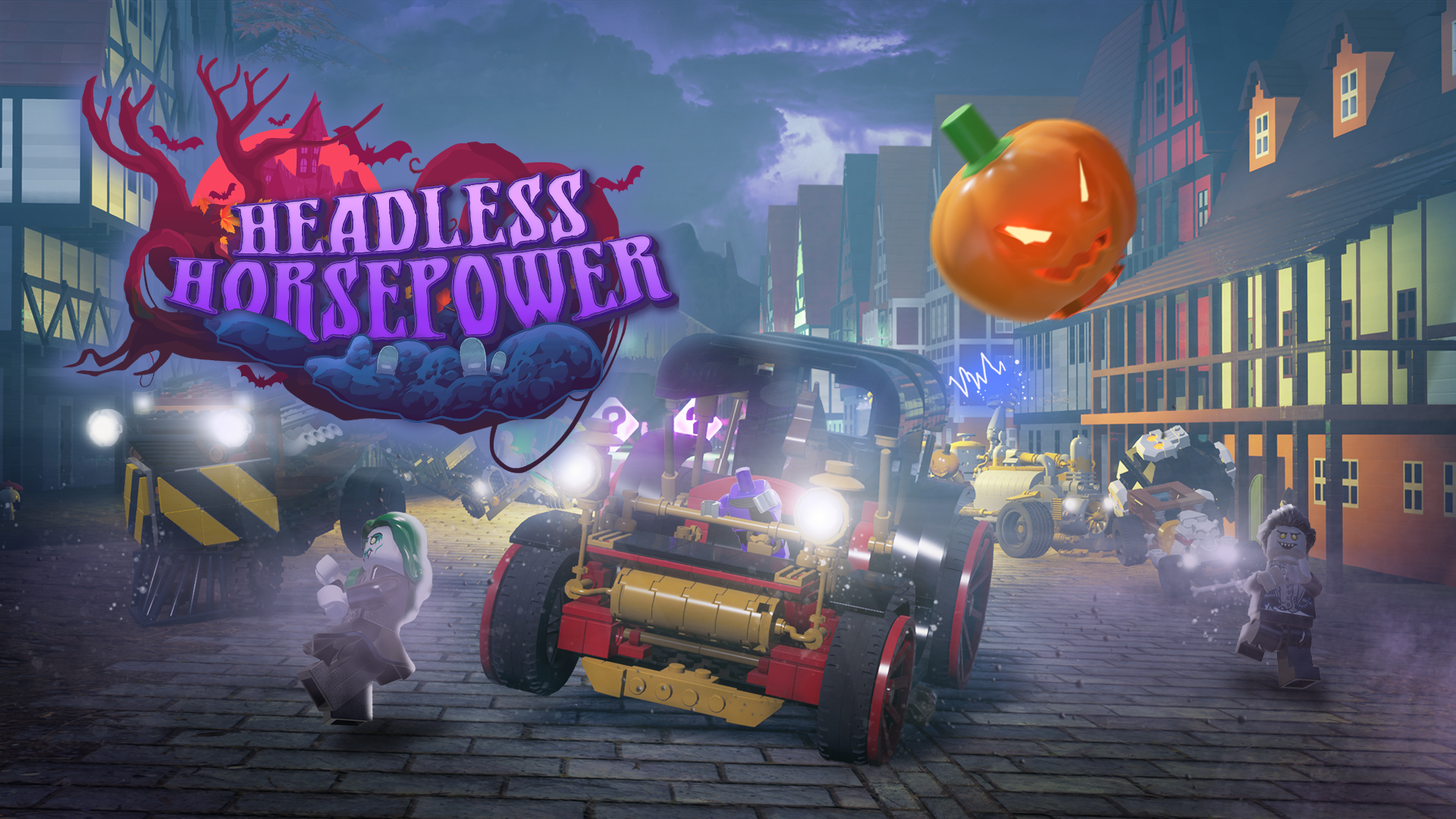
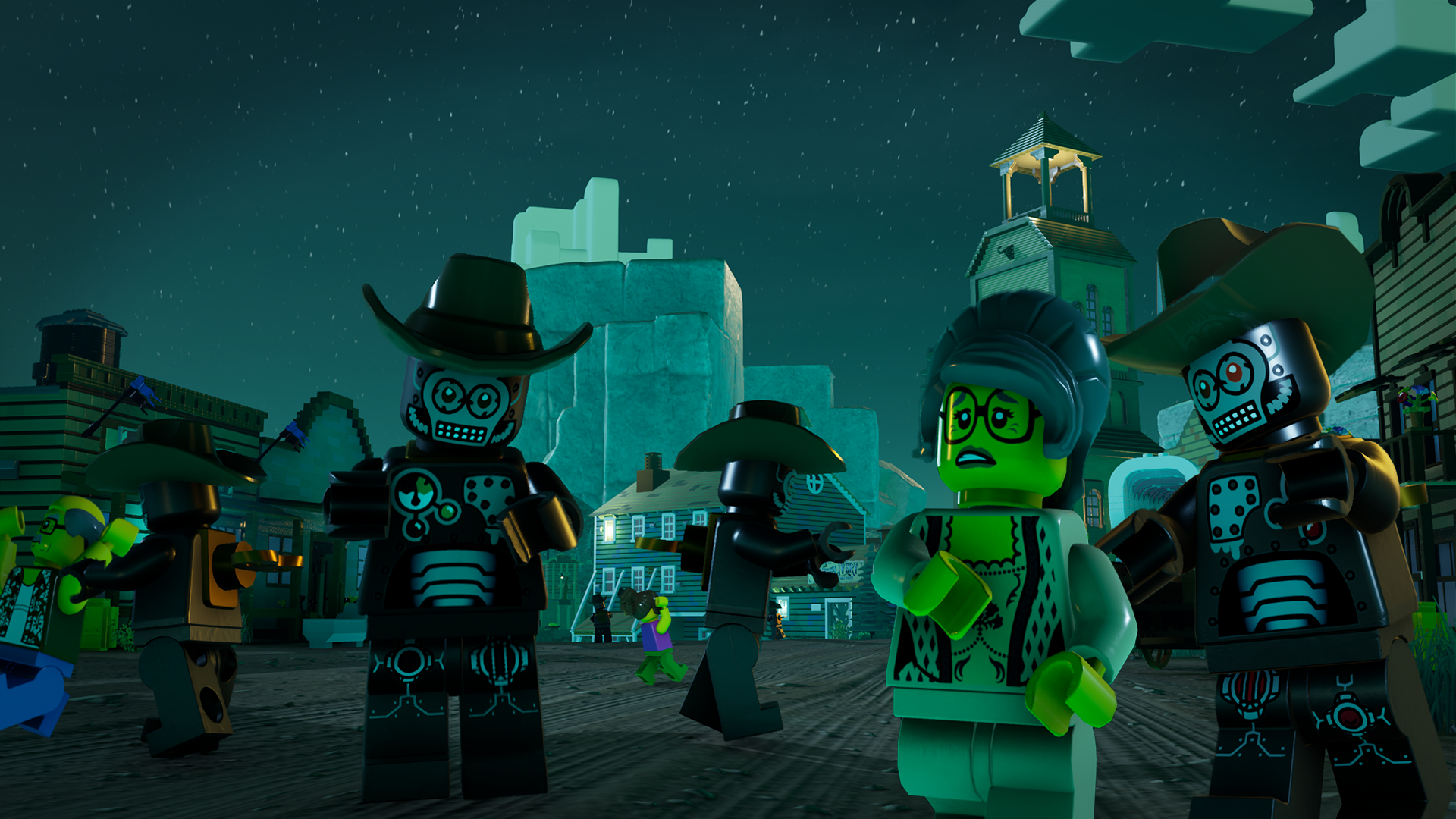
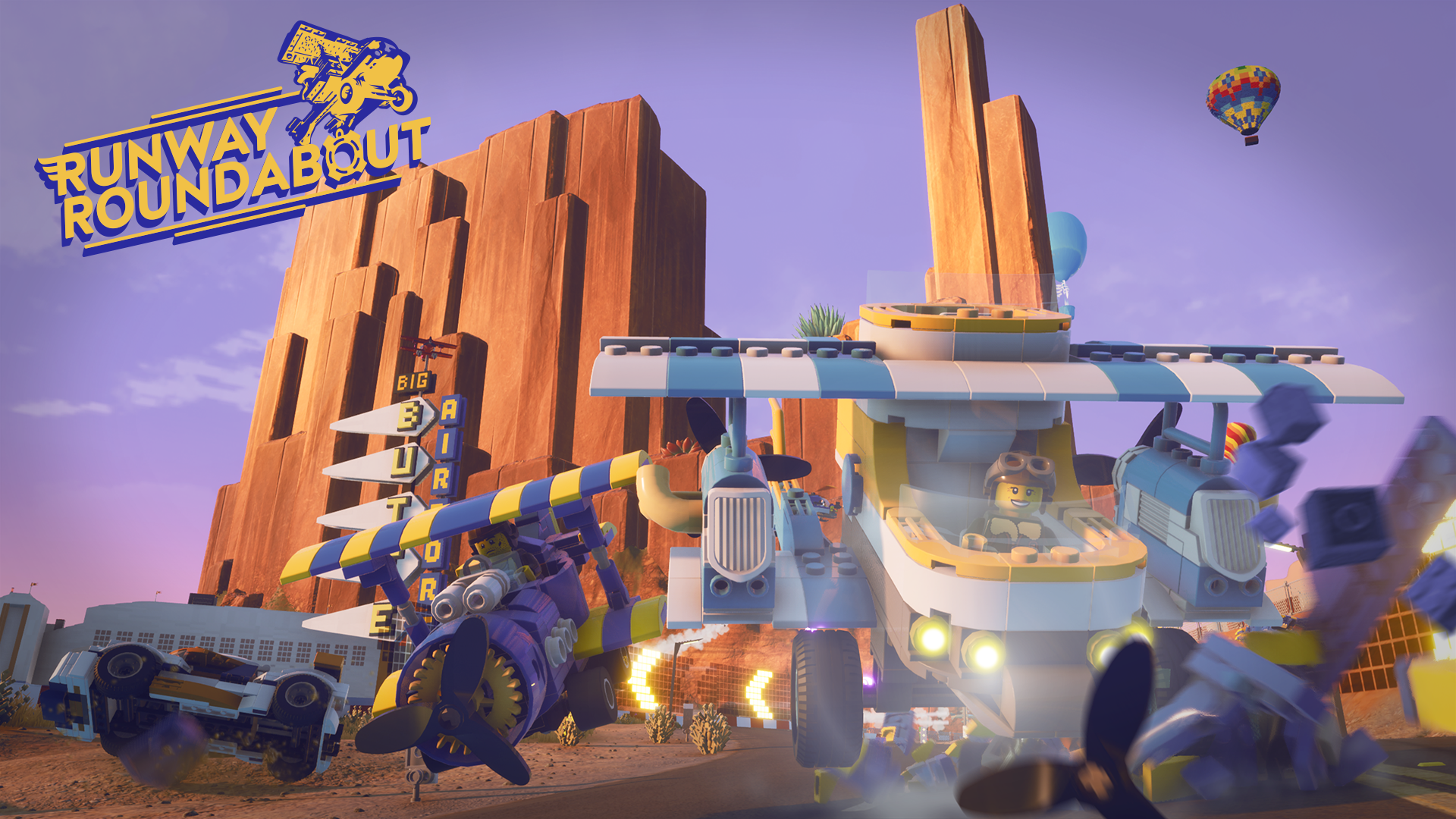
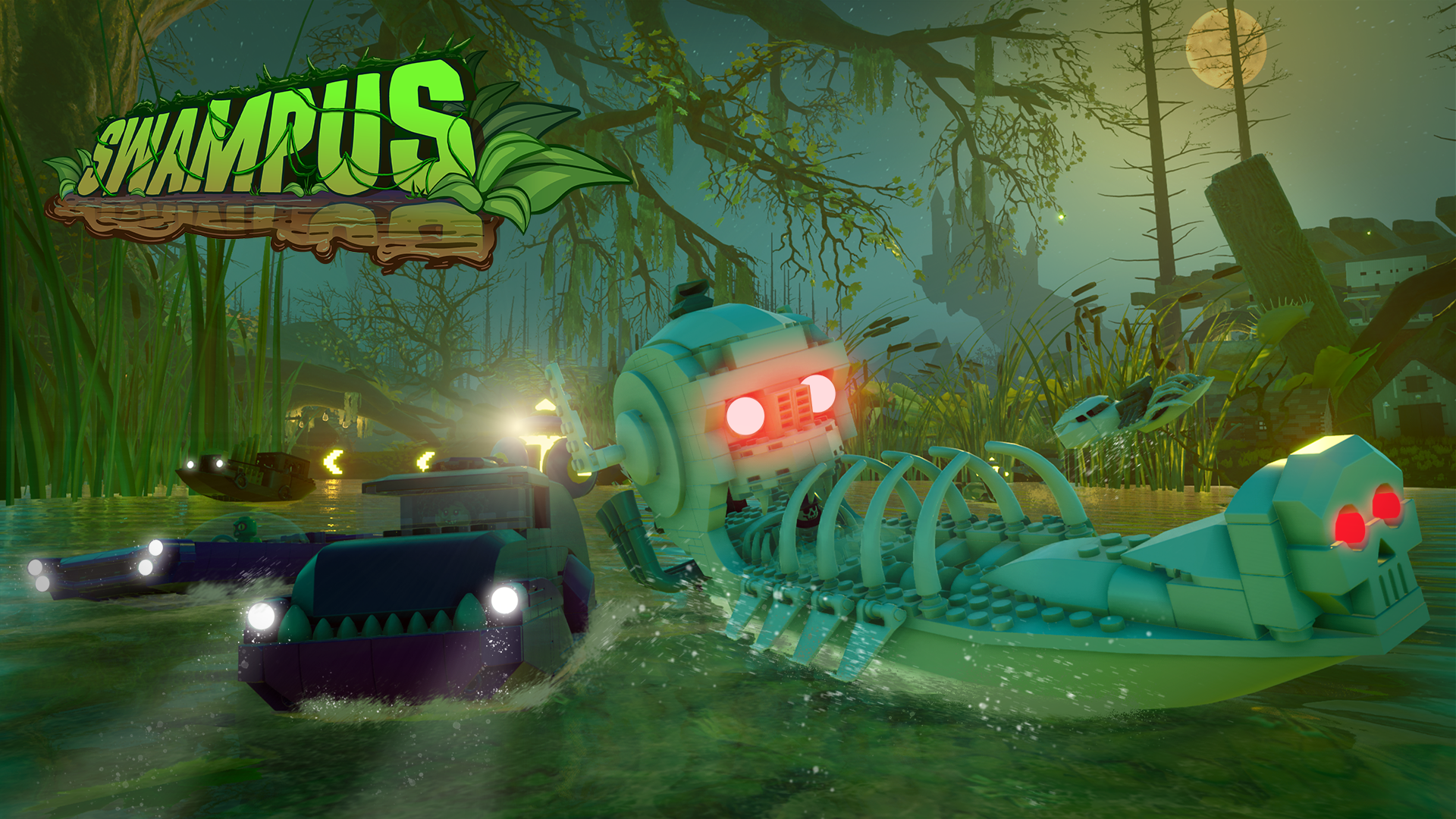
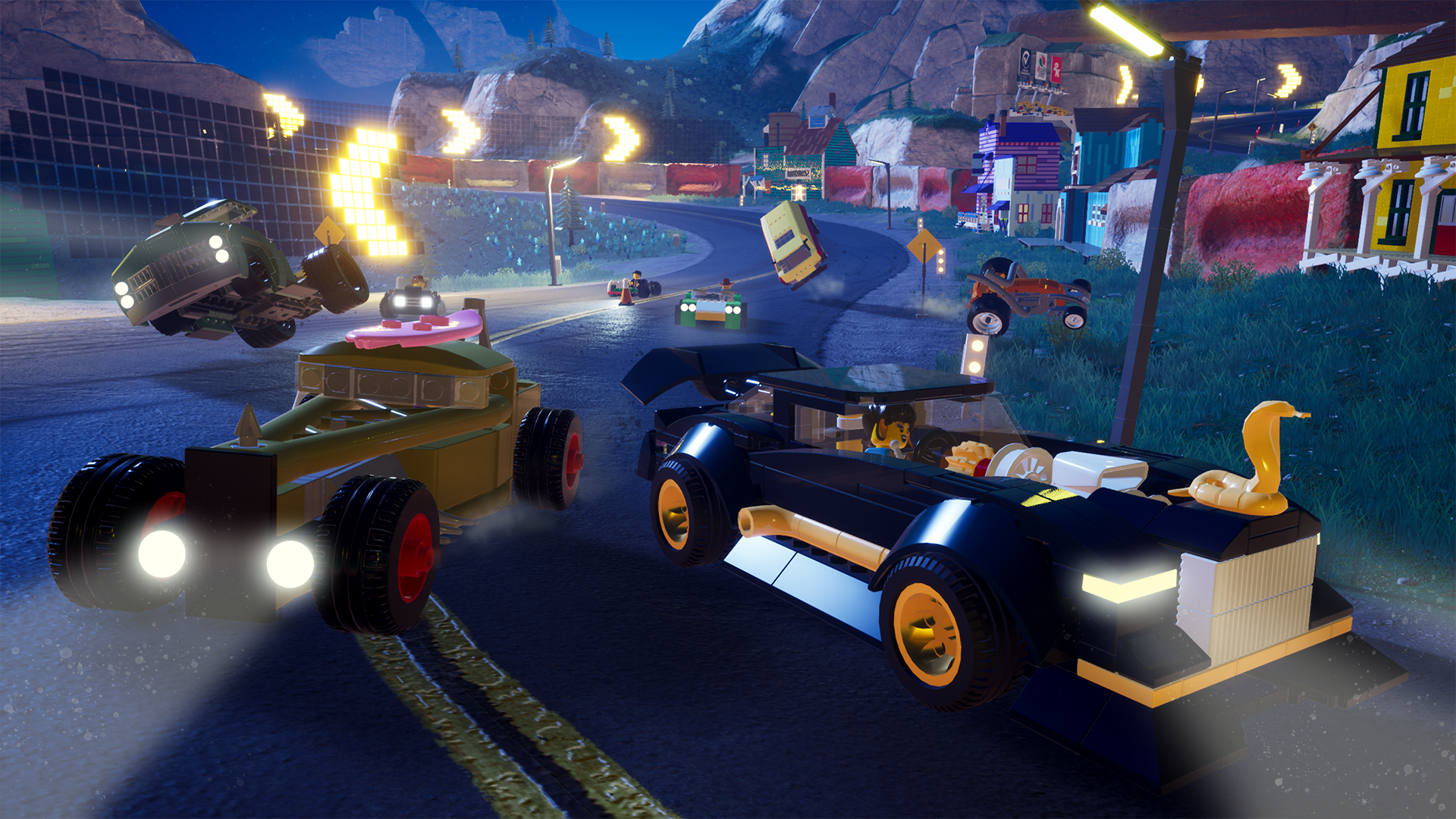
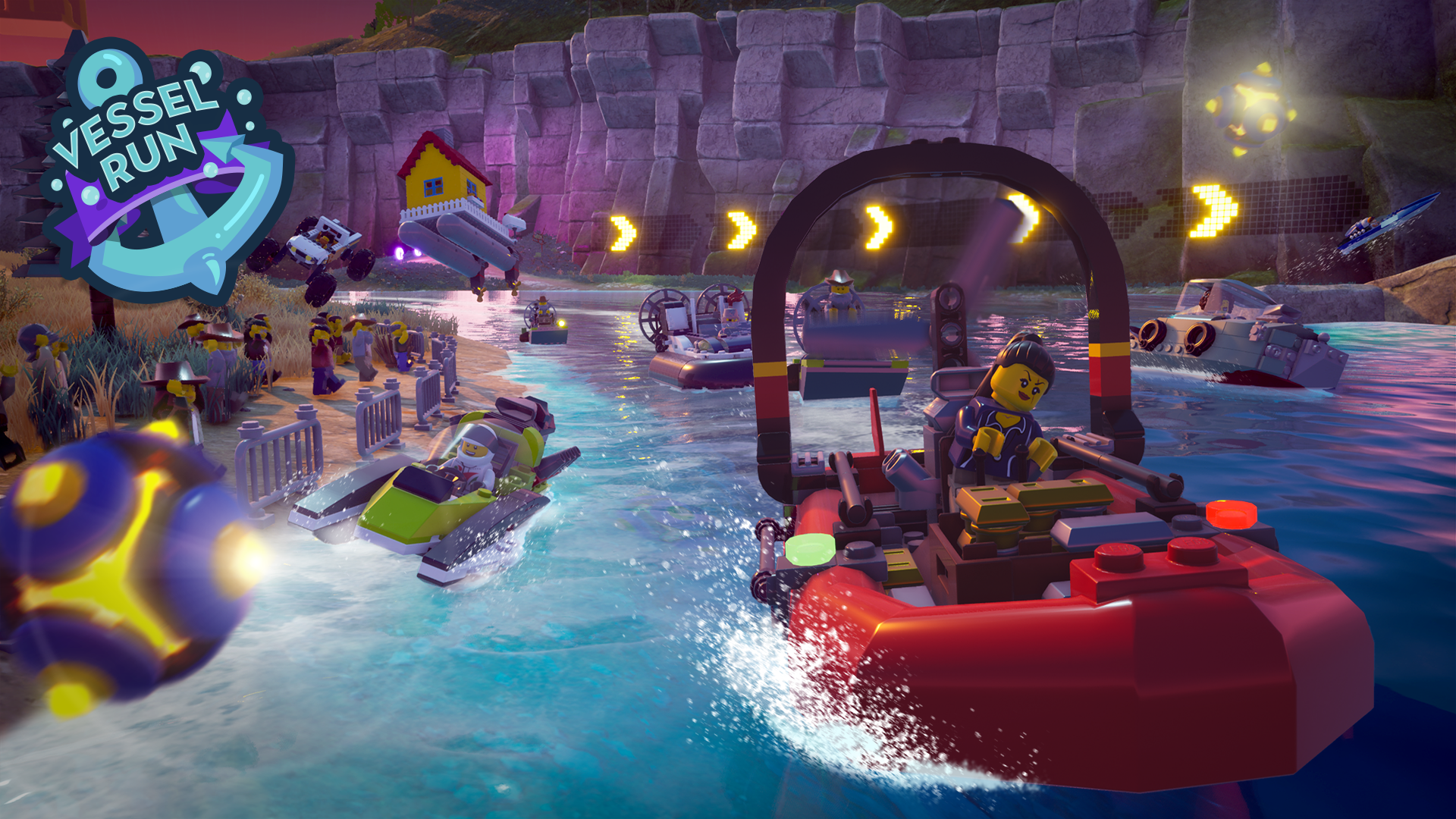
Before each mission, mini-game, or race, a loading screen appears with an action shot of the upcoming challenge. These shots were constructed in Unreal Engine, featuring the represented environments with hand-placed vehicles and props, carefully composed and lit. The logo branding was then layered, and additional visual effects were added in post-production

Created by Emmanuel Valdez. Logos and branding by Howard Milligan, Loai Abdulmotaleb, and the UI team in our Novato office.

Vehicle Concepts LEGO 2K Drive: Otto Manuel

The vehicle designs were among my favorite tasks to work on in LEGO 2K Drive. Here is the concept and final design for Otto Manuel's street vehicle. Essentially, he is the headless horseman, and I wanted his car to resemble a horseless carriage. The horse itself is in the backseat, which made constructing a cabin to fit it a challenge. The lights are lanterns, and wagon wheels serve as the hubcaps and rims. The black color gives the car an ominous tone, accented with red and gold

Concept Designs by Emmanuel Valdez

Vehicle Concepts LEGO 2K Drive: Professor Fusion

One of my favorite vehicle designs is Professor Fusion's street car, influenced by the Jay Leno Tank car known as the "Blastolene Special." It features Tesla coils, a nod to Dr. Frankenstein, as Professor Fusion is a mad scientist character in the game.

Concept Designs by Emmanuel Valdez

Everquest Dungeons: Promise Piece/ Key Art

Everquest Dungeons was a bold game idea that presented many challenges. First, it was going to be the first new EQ game in many years and the first to have a modern art style. Second, the core gameplay mechanics revolved around social play and interactions that involved teamwork and synergistic combos. Lastly, the game was a prequel that took place over a hundred years before the present, established EQ universe. To get the team and company excited about the new game, and to inform gamers what the game was all about, I had the idea to create a “promise piece” or key art that would explain and display the overall game idea and art style in a single, epic image.

Painting by Shan Qiao

Over the span of 8 weeks, I worked closely with a freelance concept artist and illustrator, Shan Qiao. It was a daunting challenge because we had yet to design each of the five races of characters that were planned for the game and accompanying enemy Goblin characters.

First, I had Shan create some rough compositions based on the art direction of having an epic battle scene with a member of each race fighting off Goblins and the iconic red dragon, Nagafen. The action oriented key art would also need to show the action of performing combos between the characters such as an Ogre throwing a Dwarf, two Elves using abilities in combination, and a Kerra (cat person) using magical powers to hold off Nagafen.

Concept art by Shan Qiao

Below are the two finalists for the composition of the piece. I chose the ones with the Dutch angle to give some tension to the heroes fighting off the horde of Goblins and a dragon simultaneously.

Concept art by Shan Qiao

This composition positioned the viewer right in the heat of the battle with the Goblins facing the heroes.

Concept art by Shan Qiao

The composition evolved to have the action broken up into three layers: On the right, a Teir’Dal druid summons a fireball above her head while an Elddar archer shoots arrows through the fireball striking down foreground Goblins. In the center, an Ogre tosses a hammer wielding Dwarf at a wizard goblin. In the distance on the far left, a Kerra is the lone warrior shielding the team from the fiery attack of an enraged Nagafen.

Concept art by Shan Qiao

This value study gives a better sense of the depth of the battle field and action.

Concept art by Shan Qiao

With each iteration, color and detail is added.

Concept art by Shan Qiao

Concept art by Shan Qiao

Concept art by Shan Qiao

Finally, a layer of enhanced effects to show the power of the Dwarf hammer and the Kerra magic shield completes the promise piece.

Concept art by Shan Qiao

Everquest Dungeons: Goblin Character Designs

The visual development of the Goblins of Everquest Dungeons was the team’s first attempt at re-imagining and modernizing a character from the old games. I was educating myself with the lore and searching for ways to make this race feel familiar yet bring something new to the table. The result was an amalgam of African tribal inspiration and the modernization of the EQ2 Goblin classic design.

Character model by Sven Juhlin

Character model by Sven Juhlin

Character model by Sven Juhlin

Character model by Sven Juhlin

The Wizard Goblin character design was an amped up version of the base Goblin. An elaborate headdress sets the design apart from the base Goblin providing a clear difference in silhouette and adding more prominence to identify this class.

Character model by Sven Juhlin

Character model by Sven Juhlin

Character model by Sven Juhlin

Construction drawing for the base Goblin. Note the African influences.

Concept art by Billy King

Construction drawing for the Wizard Goblin.

Concept art by Billy King

Lineup for the Goblin character classes.

Concept art by Billy King

The collection of reference images of Mursi and Tutsa African tribes were the inspiration for the designs.

Below are screenshots of the final in-game model in Unreal Engine 4. Our talented senior character artist, Donald Anderson used the layered material approach when texture mapping the Goblin. Also pictured are visualizations for a Fire Goblin and Ice Goblin.

Character model by Donald Anderson

Character models by Donald Anderson

Character models by Donald Anderson

Everquest Dungeons: Elddar Forest

Elddar forest was an absolute joy to art direct. Continuing the art style of the geometric art style influenced by Eyvind Earle, this was an opportunity to create a bold, fantasy forest environment. The first step in establishing the look was some reference gathering. I was looking for flora that had geometric shapes and vivd colors.

Pinterest board collection of distinctive flora reference

This Pinterest board was centered on shapes for trees. One of the terms I used to describe the tree and bush visuals was “magical topiaries”.

Pinterest board collection of distinctive flora reference

Working with an outsourcing company was a challenge for the Elddar Forest. For example, the black silhouettes were Scribble Pad Studios’ first attempt at designing the flora. The blue line is my art direction to push the shapes to more edgy and fantastical than familiar topiary shapes. I really wanted them to go crazy and have fun with these shapes.

Concept art by Scribble Pad Studios

The artists at Scribble Pad Studios took on my art direction challenge and delivered some remarkable silhouette studies.

Concept art by Scribble Pad Studios

Scribble Pad Studios embraced the idea and created some wonderful shapes. I continued to direct them to create depth by adding contrasting shapes like the flowers on top of the base shapes.

Concept art by Scribble Pad Studios

Concept art by Scribble Pad Studios

Concept art by Scribble Pad Studios

The color direction was pushed to really embrace the fantasy and fantastical look. Stylized realism allowed me to push the limits on how wacky we can go with the art direction.

Concept art by Scribble Pad Studios

Concept art by Scribble Pad Studios

With the elements figure out, thumbnails can now be generated for the Elddar Forest. The concept artists generated a wide variety of locations and biomes within the forest.

Concept art by Scribble Pad Studios

Scale is pushed to massive proportions for a magical and other-worldly tone.

Concept art by Scribble Pad Studios

Concept art by Scribble Pad Studios

Concept art by Scribble Pad Studios

Color and lighting studies including different times of day.

Concept art by Scribble Pad Studios

Concept art by Scribble Pad Studios

Concept art by Scribble Pad Studios

Unfortunately we only had time to iterate on one of the compositions. Shortly after this was completely, the game was shelved and the team moved on to another game.

Concept art by Scribble Pad Studios

Everquest Dungeons: Elddar Character Design

The Elddar race was the first of the hero characters designed for Everquest Dungeons. The creative director had a clear idea where they wanted to go with these characters who were essentially the Elves of this time period. They needed to be slender yet athletic and one with nature. We used Native American and African tribes cultural influences as inspiration for their character designs.

Concept art by Shan Qiao

Concept art by Shan Qiao

More text

Concept art by Jerad Marantz

Concept art by Farzad Varahramyan

Concept art by Farzad Varahramyan

After many iterations we were able to establish the physique and design their gear based on nature to accentuate their stature.

Concept art by Farzad Varahramyan

Concept art by Farzad Varahramyan

i had several concept artists work simultaneously and independently to explore the look of the Elddar. I was most interested in an outsourcing company in Taiwan, On Point Creative to get a more Asian-centric design sensibility.

Concept art by On Point Creative

Concept art by On Point Creative

Concept art by Shan Qiao

Once we found our base character designs for the Elddar and their different character classes we did some color studies. I picked color color combinations from a book compiled by an author who established a catalog of color combinations that worked best for clothing, specifically kimonos.

Concept art by Shan Qiao and color studies by Norris Lin

Male archer Elddar character design.

Concept art by Farzad Varahramyan

Male druid Elddar character design.

Concept art by Farzad Varahramyan

Female archer Elddar character design.

Concept art by Farzad Varahramyan

Female druid Elddar character design.

Concept art by Farzad Varahramyan

The majority of the features of the final character design were derived from this take.

Concept art by Jerad Marantz

The final designs were an amalgam of several concept artists using the base body and design from the previous final design.

Everquest Dungeons: Hill Giant Character Design

I had the chance to art direct several support characters in Everquest Dungeons (EQD) including this Hill Giant. Here is the shot of the final high resolution character model built by talented character artist, Sven Juhlin. My creative director wanted a gentle looking and earthy giant. I thought it would be fun to have a forrest growing on his back, a living biome. His weapon would be a giant, enchanted tree from the Elddar forest.

Character model by Sven Juhlin


The bone armor and scales come from its arch nemesis, a forest dragon. They provide a basis for the large scale of the Hill Giant but the log necklace, grass and moss growth on his skin, and trees on his back show just how immense this character is in the world.

Character model by Sven Juhlin

Character model by Sven Juhlin

The vast weight of the Hill Giant is also reflected in how the skin sags over his knees and ankles from gravity pulling down on the mass of his body.

Character model by Sven Juhlin

I had concept artist, William Bao, focus on crafting a distinctive shape and profile for the Hill Giant. The arms needed to be long and powerful to be able to fight with dragons. The head is low and hangs over the chest to create a plateau for the forest on his shoulders. Legs are stumpy and provide a strong, low center of gravity. The body is pudgy and wide to balance the stubby legs and long arms proportions.

Concept art by William Bao

Next, we further explored the dragon bone and scale armor along with the giant tree weapon. I thought the roots holding earth like a giant root ball would make for an effective yet natural looking weapon.

Concept art by William Bao

Concept art by William Bao

Earth tones such as browns and greens reflect the origin and natural habitat of the Hill Giant.

Concept art by William Bao

The construction drawing for the Hill Giant.

Concept art by William Bao

Everquest Dungeons: Mira

The port town of Mira was to serve as the central hub for social interactions and quest giving in the world of Everquest Dungeons. The influence of the design was ancient Carthage and modern day Santorini. The town had several features that were required by the game designers: a working port, a large magical tree that serves as a beacon for events, a back entrance, and a cluster of buildings. Mira needed to be both a protected harbor and formidable fortress nestled in a hardened sea cliff.

Concept art by Farzad Varahramyan

The architecture, landmarks, and vehicles needed to be designed. Mira was home to all the races in the game so districts were created for each race and the architecture and style were a reflection of their culture.

Concept art by Farzad Varahramyan

This was the final design for Mira. The protected harbor is elevated with magical water columns that would lift ships into the port waters. The giant tree serves as a landmark and beacon welcoming visitors. The town hugs the harbor and has a magical tram system that traverses from one end of town to the other. The back entrance was marked with symmetrical carvings on the rock formations hovering over a grand winding path.

Concept art by Farzad Varahramyan

A view looking out to the sea and harbor. The flying object is a magical Elddar crafted flying cargo crane.

Concept art by Farzad Varahramyan

Some parts of Mira have floating magical giant leaves that shade the townsfolk. Floating platforms carry shoppers to second floor businesses.

Concept art by Farzad Varahramyan

This is the interior of the Tavern where players receive their quests and meetup with friends and other players.

Concept art by Farzad Varahramyan